Fnrr2oh.putty PDocsProgramming
Related
GitHub AI Researcher Automates Own Intellectual Toil, Unleashes Self-Service Coding Agents for Team6 Key Insights from the Latest in AI-Assisted ProgrammingCD Projekt Red's Warsaw Studio Gains Architectural Recognition2025 Go Developer Survey: Key Insights on Developer Challenges, AI Usage, and Documentation GapsThe Pitfalls of Deploying Emotion AI in the Workplace10 Critical Lessons from the SAP npm Package Attack: Securing Developer Tools and CI/CD PipelinesEverything You Need to Know About the Python Security Response Team8 Key Insights into Go's Type Construction and Cycle Detection in Go 1.26

10 Things You Need to Know About Turbovec: The Rust Vector Index Powered by Google’s TurboQuant

Last updated: 2026-05-21 05:32:34 · Programming
10 Things You Need to Know About Turbovec: The Rust Vector Index Powered by Google’s TurboQuant
Source: www.marktechpost.com

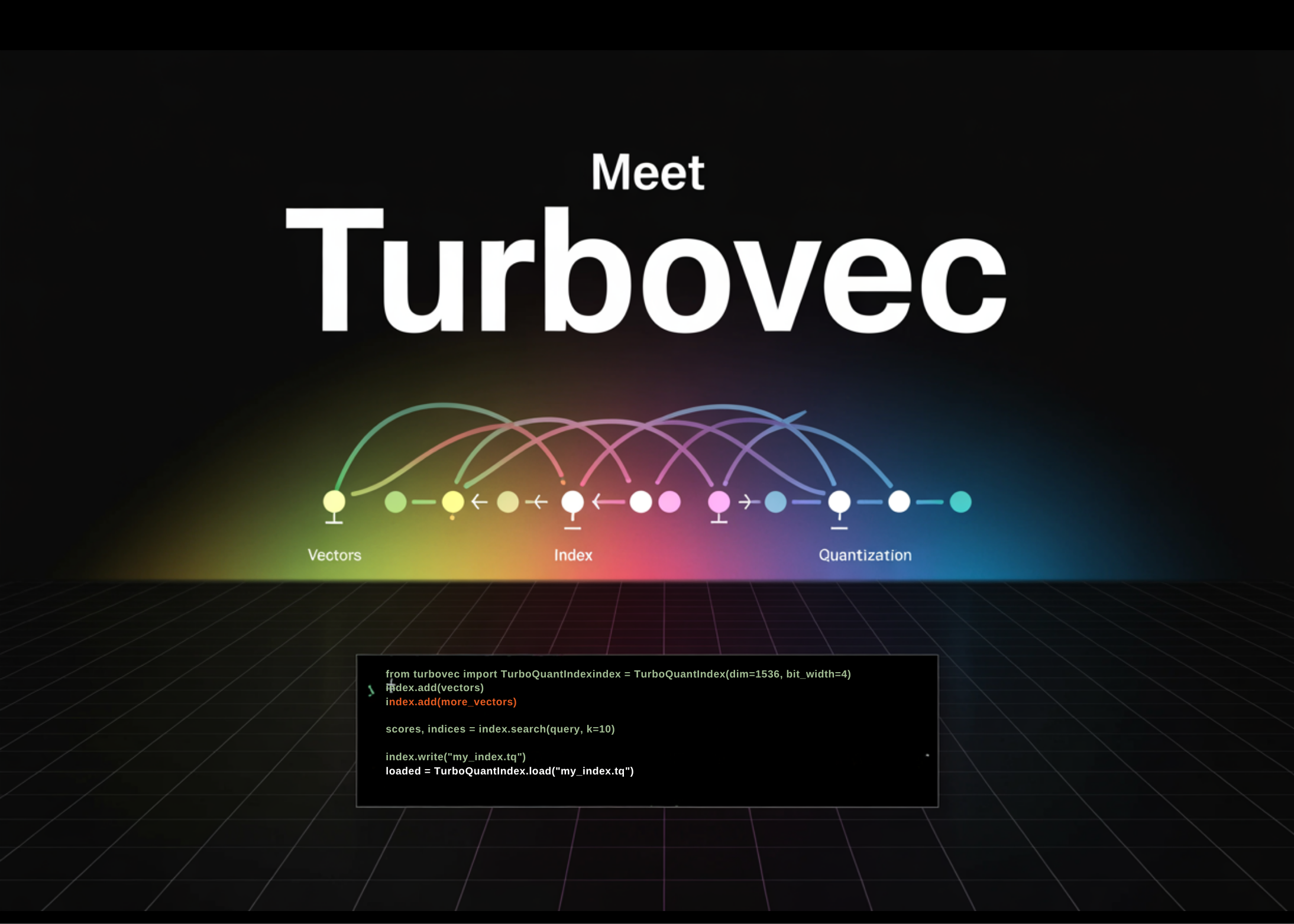
Retrieval-augmented generation (RAG) pipelines have become the backbone of modern AI applications, but scaling them comes at a cost. Storing 10 million float32 embeddings consumes 31 GB of RAM—a serious constraint for teams running local or on-premise inference. Enter Turbovec, an open-source vector index written in Rust with Python bindings that leverages Google Research’s TurboQuant algorithm. It slashes memory usage by 8x (to just 4 GB for the same corpus) and delivers search speeds that outpace FAISS IndexPQFastScan by 12–20% on ARM hardware. Below, we break down the ten essential details you need to know about this library, from its unique quantization approach to real-world performance numbers.

10 Things You Need to Know About Turbovec: The Rust Vector Index Powered by Google’s TurboQuant
Source: www.marktechpost.com